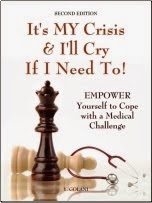
Need solutions for the medication, medical appliances and/or medical travel that you can't afford? READ EMPOWER Yourself.
A Health Information Management professional, I survived a life-threatening emergency with information that only a person of my professional experience would know. And I’m sharing it!
A group of women met regularly for a Torah/Bible Study class. While they were studying the book of Malachi, in chapter three, they came across verse three, which says: "He will sit as a refiner and purifier of silver."
This verse interested the women and they wondered how this statement applied to the character and nature of G-d. One of the women thought it might be a good idea to find out more about the process of refining silver, and get back to the group at their next meeting.
The next week, the woman called up a silversmith and made an appointment to watch him while at work. She didn’t mention anything about the reason for her interest, beyond her curiosity about the process of refining silver.
As she watched the silversmith work, he held a piece of silver over the fire and let it heat up. He explained that in refining silver, one needed to hold the silver in the middle of the fire, where the flames were the hottest as to burn away all the impurities.
The woman thought about G-d holding each of us in such a hot spot, and then she thought again about the verse that "He sits as a refiner and purifier of silver." She asked the silversmith if it was true that he had to sit in front of the fire the entire time the silver was being refined.
The man answered yes, that not only did he have to sit there holding the silver but he had to keep his eyes on it the entire time it was in the fire. If the silver was left even a moment too long in the flame, it would be destroyed.
The woman was silent for a moment. Then she asked the silversmith,
"But how do you know when the silver is finely refined?"
He smiled at her and answered, "Oh that's easy – when I see my image in it."
Learn how and what to pack for hospital or rehab center stays, how to respond so that stubborn or rude medical personnel will meet your needs, and find out about charitable organizations willing to pay part or all of your specific medical costs! Buy the E-book or print edition of EMPOWER Yourself to Cope with a Medical Challenge. Face Your Medical Problems with Dignity.
Face Your Future with Optimism.
Fill your mind and heart with upbeat thoughts and feelings.
B'SD 26 Kislev, 5777 If you want to make holiday season happier and healthier for someone, give them a book that a Methodist minister, rabbi, medical and mental health practitioners recommend:
I'm going to address a troubling problem for ill people:
rude and cruel caregivers who pay little, if any, attention to the patient’s
remarks. I've witnessed this maddening glitch first-hand as a witness to, and
as the victim of, someone's failure to listen.
Many caregivers insist that they are noble, correct and in charge when caring
for patients be they friends, relatives or clients. HOWEVER... here's how the
conversations between some caregivers and the people they're allegedly caring
for tend to go (fill in the blanks as appropriate.):
"I know what you need..."
"I want to..."
"Stop talking. Listen to me; I know what's best for you..."
"I'm going to... Now just stop that and let me..."
"I don't want to hear you say 'I can't.' Would you just let me...?"
Did you hear the sick person above the din? Me neither. And far too often that
silence leads to a deteriorating patient who's already ill, and an increasingly
strained relationship.
The name of the problem is "Inflated Ego." Or what is sometimes
called "I Disease." The caregiver is bossing around the ill person,
issuing this barrage of "I, I, I, I," messages while genuine medical
needs go unmet. This is not a healthy situation. So, I'm providing a reality
alert: The caregiver is NOT the most important person in this scene. The
patient is the VIP (Very Important Person) here!
Here's the information that's being drowned out, along with the despairing
person who needs medical help:
"That's the wrong medication/food you're giving me."
"You're hurting me when you move me around so hard. I'm not a rock."
"You're still holding the wrong medication/food."
"The doctor said not to do it like that. You're supposed to read the
directions."
"You bet I'm upset! Please stop talking/shouting/screaming over me and
listen. Just listen!"
***
Ready to close your mouths and find out how to solve the problem? Great! Hold
that pose while the ill person in your care expresses their concerns. Next,
wait for him or her to ask you to explain what you heard and understood. Only
then may you speak. Get it? Conversation is an interactive activity.
When you enter the ill person's room, do not start talking. Smile. Observe the
scene: does the ill person seem tired/rested/content/upset/warm/cold/in or out
of pain?
Ask the patient these questions, one at a time: "How are you?" and
"Did anything change since we last spoke?" "Please tell me if
you want something." Then LISTEN without interrupting as the person
responds to you, one question at a time.
Do not treat sick people as fools. Do not threaten them. Do not speak in a
condescending manner to people who are sick. You might be dealing with
neurological or physiological changes that the patient(s) cannot control. This
is not a matter of patient willpower, this is a medical reality. You might not
realize the level of physical or emotional pain you're unnecessarily causing to
that person. You just might damage someone's already fragile health by using
the wrong medicine, medical appliance or food item, let alone the wrong
attitude.
Ordering ill people to "Snap out of it! Stop acting sad and sick" is
cruel. Behave respectfully or have someone else perform the personal care. Your
change in behavior just might improve someone's quality of life. Prevent
unwarranted suffering. Remember: communication is supposed to be fair and
productive. Good communication ends in relief.
One more item on this sensitive subject: study the sick person's behavior and
body when hired help is providing medical care. Elder abuse and other abuses in
the medical world exist. Prevent and end them by practicing good sense. Listen
with your ears, eyes and heart.
Here’s a handy list of caregiver tips, developed from my
personal experience and that of some of my Self-Help Coaching clients:
·Make a chart of all
medications used by the loved one you’re helping. Tactfully help him or her to
remember to take those medicines.
·Ask everyone who enters the patient’s room if they have washed their hands.
"No" and silence are NOT acceptable responses.
·Ask nurses to read drug orders out loud and match them to the patient’s arm
bracelet BEFORE giving something to the patient.
·Bring easily portable stuff on visits: a deck of cards, iPODs or other
devices for playing music, or something else that the patient enjoys. Coax the
patient to use his or her brain.
·Keep a little notebook with your observations so you can discuss your
concerns with medical staff, family and friends in a productive NOT GOSSIPY
manner. Write the notes discreetly. Trust me, sick people notice things. And we
tend to be easily upset.
·NEVER give a patient medication without proper supervision.
·Don’t help the patient in and out of bed unless the medical staff trained
you to do this safely.
·Help
the sick person to escape the confines of being ill. A car ride, a day in the
park or gentle beach, perhaps a shopping center with comfortable seating areas,
a family event, are just some ideas for trips. Cabin fever can slow down
recovery and coping processes. Changes in scenery can work wonders.
·Cheerfully help
with housework: cooking, cleaning, child care, lawn care, etc. Find out if meals
can be safely made by other people.
·Allow
the person to speak about their medical/emotional crisis. The release leads to
perspective, emotional relief and healing. In mental circles, this is called
"venting" and wow it’s a great help!
·Chat with the
patient about life. Your work, news headlines, funny incidents, something other
than illness.
·Forgive the person for saying or doing
something unusual. Some medications affect behavior and memory, let alone body
functions. Thinking clearly might be a struggle for someone coming out of
anesthesia or taking medications. The challenging medical situation is a hard thing to manage on its own.
·Bite your lips!
Don’t focus on what your loved one can or cannot do. Infantilizing a person
facing a medical or emotional crisis is cruel and harmful. DO FOCUS on what the
person can do and intends to do. Meeting goals, and trying to do so, is
strengthening in many ways.
·Assist the person
in your care when they’re taking medication. Wipe lips as necessary, and with a
gentle touch. Remember also, that eyesight might be affected. He or she I might
not be able to read the small print on the bottle.
·Be gracious about sleeping problems. A
person facing illness could have difficulty sleeping. Gently and firmly explore what will help
the person to relax, to enjoy restful, restorative sleep.
·Empower the patient. Let him or her make
choices, use the television remote and anything else they’d like to do within
reason. Offer to help
the person to create a list of goals on a paper or a poster-board they can more
easily read. Check off accomplishments and celebrate them.
·Have patience. Be
respectful. Know that you cannot possibly understand the illness experience
from the patient’s perspective. Some things are hard to convey. Practice a
compassionate pose on your facial muscles. Use it often.
While we're on the topic of patience and perspective,
consider this: One of the worrisome - and dangerous - problems for people with
cancer is loss of appetite from chemotherapy (sometimes referred to as Cancer
Anorexia). That causes an ever-lowering calorie count. Not a good side-effect!
Cancer upsets metabolism. Chemotherapy traumatizes the human body, creating the
need for superb nutrition. Side-effects such as nausea, vomiting, diarrhea and
physical weakness from chemotherapy make food most unappetizing. Both problems
combined mean the affected person keeps losing weight, mostly from muscle loss.
A delightful solution to the problems is to put some thought, family and
friendship energy into preparing highly nutritious and visually appealing meals
for a person with cancer. Imagine the good that can do for someone who
desperately needs body-building food.
The need for nutrition is true for any seriously ill person, no matter who is
facing a medical crisis or why. Look at the situation from the situation of a
sick child, elderly person, or anyone who's ill and their worldview. Do they
lack teeth? Do they have mouth sores that will be further irritated by food and
hot or cold temperatures? Is the person's gag reflex going to be problematic?
Scolding is NOT appropriate. Making fun of the person
refusing or unable to eat is cruel, not helpful. Neither are guilt trips. Cook
up a meal and a plan to get the suffering person to eat it. Focus on pleasure,
soothing results, and compassion.
Find solutions. Use blenders to create smooth, easily
swallowed textures. Straws make food fun for little ones sipping blended food
with soup or water added to it. Warmish gello is a quick picker-upper for
someone trying to build strength to swallow more nutritious fare (it also
soothes sore throats). Use towels as bibs for larger diners who spill food
despite their best efforts to be neat. DO NOT COMPLAIN about the laundry this
will cause. Here's a nice dessert for everyone involved: by helping the ill
person to eat better, you'll feel better for expressing a level of kindness
unparalleled in the medical world.
While we're on the topic of good manners, here's the
skinny on Wheelchair Etiquette 101:
People who use wheelchairs don’t do that for your
convenience. Think of it this way: the wheelchair is similar to an arm, leg or
any other necessary body part for the person sitting in one. A wheelchair is
literally the extension of a person's body, not a toy or handy-dandy catch-all.
You don't smear fingerprints on someone's glasses, do you?
Try out their hearing aids? Of course not; that's crossing personal boundaries.
When you fail to heed the personal boundaries that wheelchairs represent, you
make people uncomfortable...
Face Your Medical Problems with Dignity.
Face Your Future with Optimism.
Fill your shopping list with things that people appreciate!
I've enjoyed the warmth of friendship plus the glow of Hanuka candles at parties for the past two nights. I'm invited to another party this evening, and making one of my own tomorrow night. I realize that it is Kwanzaa and Christmas season, too, and that many of my readers are wondering about suitable and affordable gifts for friends, family members and work colleagues. I have a list of ideas to offer that could very well meet your needs:
1. Gifts from the heart. Promise to run specific errands or to teach someone a skill you can impart to them. Your investment in time and someone's quality of life is a gift from the heart.
2. Love notes. Leave them around the house or office, praising some behavior, remark or insight in the person you appreciate. A show of appreciation is a gift that lasts forever. All it costs is a bit of time to share your thoughts. 3. Give the person something that they need. If they're ailing or dealing with someone who is sick, they might appreciate a book that they and their loved ones can share to minimize problems and to maximize happiness. Buy a copy of
Click the picture and have it delivered to the recipient when you make your order. I hope that the above ideas took the wrinkles right out of your furrowed brow and gift list. Buy the E-book or print edition of EMPOWER Yourself to Cope with a Medical Challenge. Face Your Medical Problems with Dignity.
Face Your Future with Optimism.
Fill your shopping list with simple, loving solutions.
B'SD 1 Tevet, 5775 Before I go further with this blogpost, I want to thank the people who've expressed their sympathy and support to me for contending with that recent "There's another meningioma, and the MRI technician thought it was harming me?" shock to my system. Your outreach and reaction to the situation is remarkable, the sort of goodness we pray to find in the world.
I want to underscore that it was a mistaken diagnosis.
Humans are humans.
GOD blessed me with competent clarification
from the new neurosurgeon on my medical team:
Nothing is amiss.
Together we blessed me with the
ability to deal with an alarming announcement
in a calm, rational manner.
My past practice with and dedication to
behaving sensibly, no matter what, paid off well.
My new neurosurgeon and I have a terrifically pleasant rapport. He and I agreed to do another photo-op same time, next year, to monitor things. He responded pleasantly and thoroughly to all my questions, treating me and the friend who'd escorted me to the appointment with total respect and a sense of humor. I consider the whole phenomenon a gift from GOD.
I didn't post an update yesterday due to being down with a severe cold. The bug felled lots of people in my community. I'm happy to be feeling better today and want to share some important information.
One of the issues that this blog and the
book deal with is mental and emotional health (yes, they're individual realities).
I found an online article that highlights a point I make in my personal life and in my self-help coaching plus public speaking efforts: ASK the person with a problem what YOU can do to help them. Don't assume anything, not even that you understand the scope of the situation. Prophecy and mind-reading are not part of your picture, OK?
Here's the article I suggest that you read and share widely:
Buy the E-book or print edition of EMPOWER Yourself to Cope with a Medical Challengefor yourself, a friend or a loved one. Improve someone's holiday season TODAY! Face Your Medical Problems with Dignity.
Face Your Future with Optimism. Find your inner hero or heroine and live up to him or her. It makes life much more pleasant. Psst:EMPOWER Yourself to Cope with a Medical Challengeshows you how to do that!
B'SD 16 Kislev, 5775 As promised, here's another in this week's lineup of endorsements for
"I received EMPOWER Yourself to Cope with a Medical Challenge one week after [suffering] my own medical crisis and found it very helpful. [It] will be of great benefit both in dealing with the fragile emotional health of sick patients and the stressful situation of the patient's caregiver… [with] very practical comprehensive information for dealing with a health-related crisis that is so seldom available to someone who is ill and preoccupied with their own troubles. "Ill people are often compromised and often don't know where to look for guidance. Putting so much useful information at their fingertips will help them navigate the difficulties of a confusing medical system. Combined with [the author's] encouragement to never give up hope, the book will be of great aid to anyone with a sudden serious medical emergency." - Daniel Eisenberg, MD, Department of Radiology at the Albert Einstein Medical Center in Philadelphia, PA; Assistant Professor of Diagnostic Imaging at Thomas Jefferson University School of Medicine; Medical Ethicist www.danieleisenberg.com
Buy the E-book or print edition of EMPOWER Yourself to Cope with a Medical Challenge. Face Your Medical Problems with Dignity.
Face Your Future with Optimism. Find, then use, the information you need.
Less than 2 weeks to go until Hanuka. Kawanzaa and Xmas are coming up, too.
Here's something that several people recommend for the people on your gift list who need medical miracles and soothing ways to deal with relevant needs:
I'll be sharing endorsements for the book (including the updated edition) this week. Here's the first one...
January 3, 2007 - My dear Yochi,
Girl, you and I are kindred spirits.
I just
finished reading your wonderful manuscript, and I stand in awe of
you.
Fifteen and a half years ago I was the recipient of a heart
transplant. I know what you mean about being wheeled into surgery, taking one
last long lingering look at the people I loved and who loved me as those big
doors closed behind me...
You are Jewish and I am
Christian, but the importance of the spirituality you described was incredibly
accurate. After I had been accepted as a candidate for a transplant, some ladies
from my church visited me. One of them chirped, "We are praying that they will
find a heart for you."
I was appalled. "Don't do that," I said. "You are
praying for something bad to happen to somebody else. Pray as I do - that God
will heal me, and leave the means up to Him and the doctors...
OK, God, I
thought. You know what's best for me. Here I am. I'm yours...
Your workbook is great...
Your book should make crises easier to face for
most people. You did a great job with it. Anyone who gets past self-pity long
enough to pick that book up and get into it should have an easier time of
it.
A crisis is a crisis, and your book doesn't change that. What it does
is provide people with some practical advice on how to deal with a crisis.
Great stuff, Yochi!
After reading your book, I feel like hugging
you...
Love, Carl P.S. "A MUST READ for anyone facing a life-threatening or physically crippling
illness" -- Carl Phillips, ASTA Certified Hospital Consultant and lay
minister.
Buy the E-book or print edition of EMPOWER Yourself to Cope with a Medical Challenge. Face Your Medical Problems with Dignity.
Face Your Future with Optimism. Fill your mind and heart with faith that you can do so.
4 Kislev, 5775 Sorry for the delay, folks. I've been trying to post footage of the new Bnai Akiva naming ceremony. Send me a link of the action if you can.
Canadians and Americans near and far are marking the "Thanksgiving" holiday weekend with in-laws, outlaws, illnesses, debt, too much food, and overspending onBlack Fridaydespite previous declarations of "thank yous" to GOD for their bounty. I suspect that they are trying to soothe inner agony that increases with the social pressure to appear cheerful, despite negative circumstances, at the holiday season. Some of the participants bemoan their fates and sufferings verbally or inwardly, wondering why anyone else sees life with a cheerful perspective.
That misery will increase as Xmas, Kwanzaa
and Hanuka
come closer on the calendar because of:
Family time marred by symbolic victories by warring ex-spouses leave offspring and everybody wondering how to achieve happiness.
Over-exerting yourself somehow.
Medical and mental health/emotional problems seeming to be insurmountable as the whole wide world smiles despite your pain.
A sense of "need" or social obligation to dine on seasonal foods bad for your body leaves you suffering on and off the toilet, perhaps in medical offices.
Want to prevent or minimize the suffering?
Get your grin back as you learn how to lower your medical debts with assistance from charitable foundations worldwide. Read laugh-out-loud stories that validate your point of view, the improve on it. Learn about air transport options for people in fragile health. Fill your need for medical equipment from modest hospital gowns to free wheelchairs, and all the stuff in between
Read
You'll find funny stories to cheer you up,
solutions to boredom, emotional roller coasters,
medical needs and more.
That will leave you feeling thankful.
Do you have a question about the book or your medical situation? Share you question in the "Comments" section or send me an E-mail. I just might have a satisfying answer for you.
I hope you'll feel, and BE better, after reading it.
Many readers have let me know they got their grin back in one reading. Then they shared those smiles with other people.
Buy the E-book or print edition of EMPOWER Yourself to Cope with a Medical Challenge. Face Your Medical Problems with Dignity.
Face Your Future with Optimism. Find the book you - or someone important to you needs - by clicking here. Get YOUR grin back!